New Jersey has one of the largest and most diverse Indian populations in the country, which means the search for the Best Biryani in New Jersey turns up far more variety than most people expect. Biryani is not one dish across the state, it is a regional cooking tradition that changes significantly depending on where in India it originated, and different parts of New Jersey tend to reflect different regional styles. Picking the best one really depends on knowing which regional tradition you are actually craving.
This guide breaks down the major biryani styles found across the state and explains what sets Hyderabadi biryani apart, the style served at Hyderabad Biryani & Banquet in East Windsor.
Why New Jersey's Biryani Scene Is So Regionally Diverse
Indian immigration to New Jersey has drawn heavily from several different regions of India over the decades, including Gujarat, Punjab, Andhra Pradesh, Telangana, and parts of South India more broadly. Each community has brought its own culinary traditions with it, which is why a biryani ordered in one part of the state can taste completely different from one ordered somewhere else, even though both are labeled the same dish. Understanding this regional variation is the first step to finding a version that actually matches what you are looking for.
The Main Regional Biryani Styles You'll Find
Three broad biryani traditions show up most often across New Jersey menus:
Hyderabadi biryani developed under the Nizams of Hyderabad, blending Mughlai dum cooking technique with the spicier, tangier character of Andhra cuisine. It is known for sealed pot cooking, layered rice and protein, and regional variations like gongura or avakai biryani built around specific Andhra ingredients.
Kolkata style biryani, associated with Bengal, tends to be milder and often includes a potato alongside the meat, with a slightly sweeter spice profile shaped by Awadhi Mughlai influence as it traveled from Lucknow to Kolkata.
Punjabi and generic North Indian biryani, common at many general Indian restaurants, is usually simpler in preparation, often closer to a spiced pulao than a true dum cooked biryani, with less regional specificity in its spice blend.
Knowing which category a restaurant's biryani falls into before ordering helps set the right expectations, since these are genuinely different dishes sharing one name rather than small variations on the same recipe.
Spice Profiles Compared Side by Side
How do the spice levels of these three styles actually compare? Hyderabadi biryani generally runs moderate to hot, with tangy regional versions like avakai or gongura pushing toward the spicier end, while Kolkata biryani tends to be mild to moderate with a slightly sweet undertone from the potato and a gentler use of whole spices, and Punjabi or generic North Indian biryani usually sits mild to moderate as well, though it often leans more on masala blends than on whole spice layering.
Beyond raw heat level, the character of the spice differs just as much as the intensity. Hyderabadi biryani builds flavor through layered whole spices, saffron, and fried onions sealed into the dish during dum cooking, which produces pockets of varying intensity from bite to bite. Kolkata biryani leans on a milder, more rounded spice blend influenced by its Awadhi Mughlai roots, with the potato acting as a buffer that softens the overall heat. Punjabi style versions typically rely more on a pre-mixed biryani masala added during a single cooking stage, which tends to produce a more uniform, less layered flavor throughout the dish. For diners who want a meal that changes in intensity as they eat rather than tasting the same from the first bite to the last, Hyderabadi style generally delivers that more than the other two.
What Sets Hyderabadi Biryani Apart?
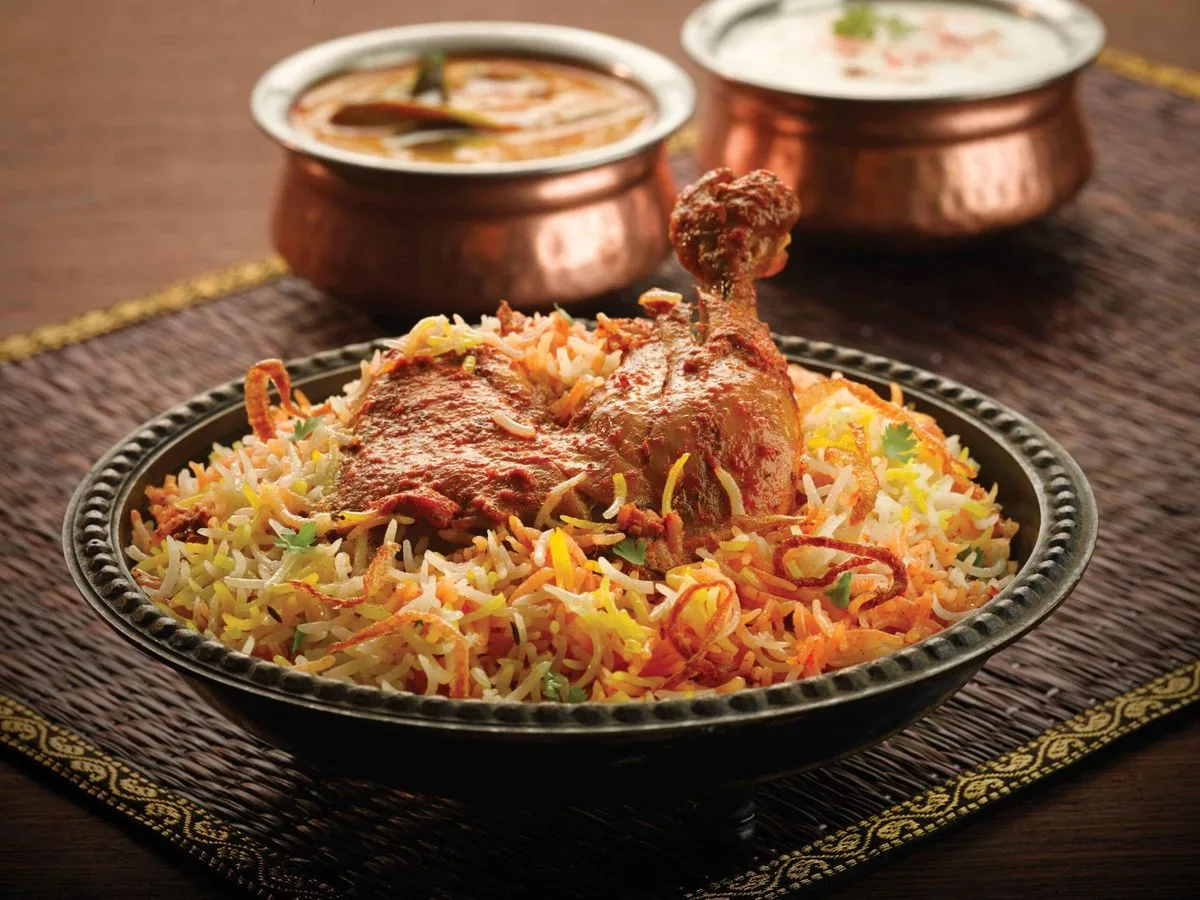
Hyderabadi biryani is distinguished mainly by its dum cooking method and its Andhra regional influences. The dum process, sealing marinated protein and partially cooked rice together in a pot and finishing it over low heat, produces visibly separated, fragrant grains with distinct color layering, rather than a uniformly mixed rice dish. The Andhra side of its identity shows up in dishes like avakai biryani, made with raw mango pickle spice, and gongura biryani, built around tangy sorrel leaves, both of which are specific to this region and not typically found in Kolkata or Punjabi style preparations.
Quick Ways to Judge Quality, Regardless of Style
A few signs apply across any regional style, not just Hyderabadi. Grain separation is the clearest visual indicator of proper dum cooking, rice that holds its shape rather than clumping together. Spice layering, noticing pockets of stronger and milder flavor as you move through the dish, is another sign of a properly sealed, slow cooked preparation rather than a quick stir fried version. Menus that break biryani into specific regional names, rather than listing one generic entry, generally reflect more attention to the dish as a specialty rather than an afterthought. You can see this reflected on HBB's indian restaurant menu, where biryani is separated by protein and Andhra regional style.
Matching the Style to What You're Craving
If you want rich, aromatic flavor with a tangy, spicier edge, Hyderabadi biryani is generally the closer match, particularly the avakai or gongura versions. If you prefer something milder and slightly sweeter, a Kolkata style biryani with potato is likely a better fit. For something simpler and less regionally specific, a Punjabi style version works, though it will generally lack the layered depth of a true dum cooked dish. Knowing this ahead of time saves the disappointment of ordering a dish labeled biryani that does not match what you expected.
Where Andhra and Hyderabadi Communities Are Concentrated in NJ
New Jersey has one of the largest South Asian populations of any state, and within that broader community, Central New Jersey towns along the Route 1 and Route 130 corridors, including areas like East Windsor, Monroe, and parts of Middlesex and Mercer County, have a notable concentration of Telugu speaking families from Andhra Pradesh and Telangana. This regional concentration is part of why Hyderabadi and Andhra style restaurants, with dishes like gongura chicken or avakai biryani on the menu, tend to cluster more heavily in this part of the state compared to areas where other Indian regional communities, such as Gujarati or Punjabi populations, are more concentrated instead. Knowing this general pattern can help explain why a specific regional biryani style is easier to find well made in one part of New Jersey than another.
Where Hyderabadi Style Fits in Central New Jersey
Central New Jersey, including towns like East Windsor, has a strong concentration of Andhra and Telangana families, which is part of why Hyderabadi style biryani has a solid presence in this part of the state specifically. For diners in the area looking for the dum cooked, regionally specific version rather than a generic rice and meat dish, this is generally the style worth seeking out locally, including options spanning chicken, goat, vegetarian, egg, and seafood biryani.
Frequently Asked Questions
Generally yes, particularly the tangy, pickle based versions like avakai or gongura biryani, which bring both heat and sourness. A Kolkata or Punjabi style biryani tends to be milder in comparison.
Look for visibly separated, distinct grains of rice with color variation between layers, rather than a uniform, mixed appearance. This is the clearest sign of the sealed pot cooking method regardless of regional style.
Yes. A potato alongside the meat is a defining feature of Kolkata style biryani, a tradition that developed from Awadhi Mughlai cooking as it moved from Lucknow to Bengal.
Yes. Chicken, goat, vegetarian, egg, and seafood biryani in Hyderabadi style can be ordered for pickup online in East Windsor.
Conclusion
Finding the best biryani in New Jersey starts with knowing which regional tradition actually matches what you want, since Hyderabadi, Kolkata, and Punjabi versions are genuinely different dishes rather than small variations on one recipe. Anyone in Central New Jersey looking for the dum cooked, Andhra influenced version specifically can get in touch with Hyderabad Biryani & Banquet directly.