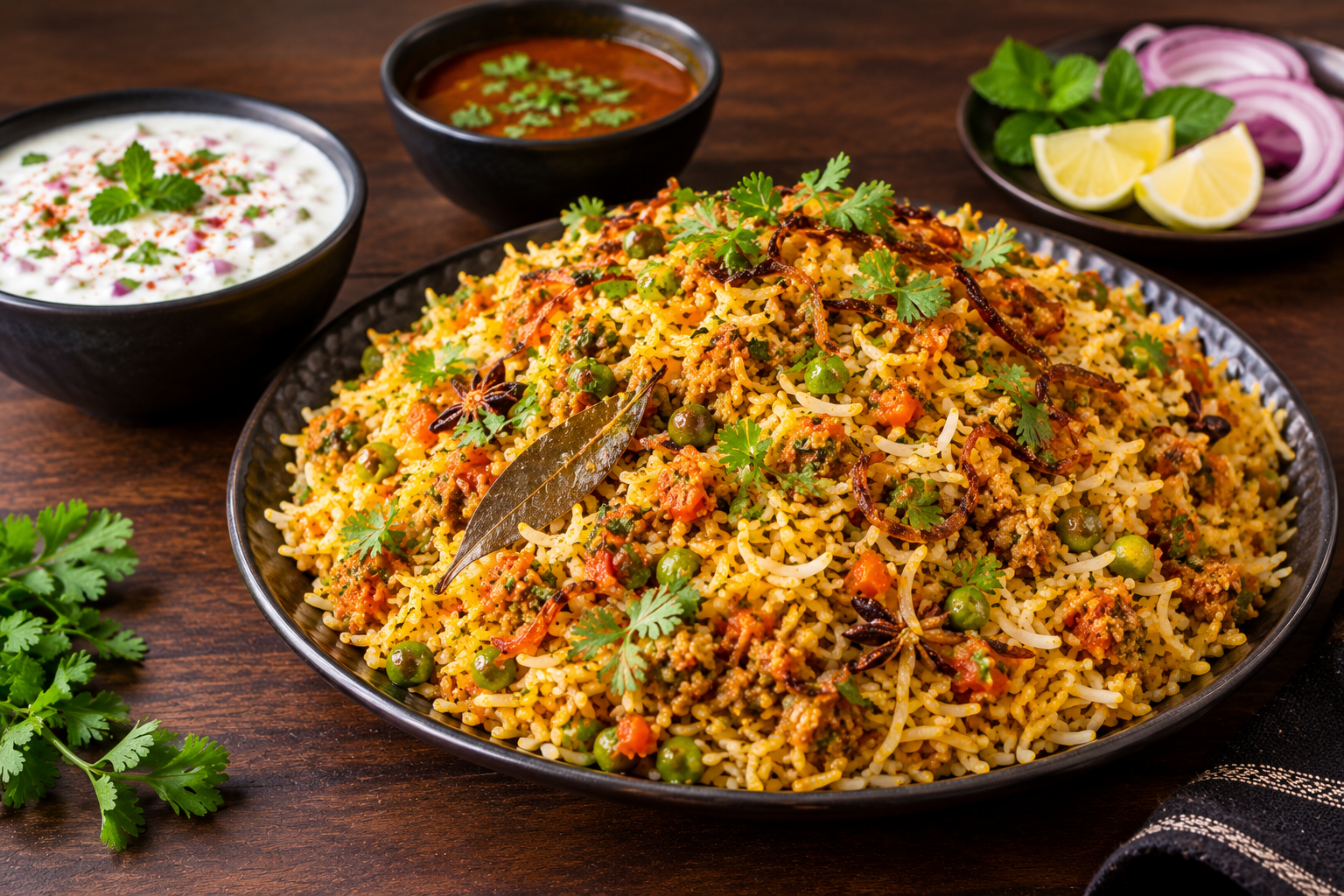
On a menu that also lists biryani and pulao, fried rice can look like a simpler, less distinctive option, but it is actually a separate cooking tradition entirely. Fried Rice on an Indian restaurant menu typically comes from Indo Chinese cooking, a style that developed in Indian cities with large Chinese immigrant communities and blends Chinese stir fry technique with Indian spices and seasonings. It is not a simplified biryani, it is its own dish with its own method.
This guide answers the questions that come up when deciding between fried rice, biryani, or pulao, and explains how fried rice is prepared at Hyderabad Biryani & Banquet in East Windsor.
What Is Indo Chinese Fried Rice?
Indo Chinese fried rice is a wok tossed dish made with already cooked rice, stir fried quickly over high heat with vegetables, seasonings, and a protein of choice. The style originated from Chinese communities that settled in Indian cities like Kolkata generations ago, and over time the technique was adapted with Indian spices, garlic, and sauces, creating a distinct category that is neither traditional Chinese cooking nor traditional Indian cooking on its own.
This is also why Indo Chinese dishes are almost always grouped together on an Indian restaurant menu rather than mixed in with biryani, curry, or tandoori sections. Fried rice usually shares a menu category with dishes like Hakka noodles, another stir fried, Indo Chinese staple that follows the same high heat, sauce based cooking method but with noodles in place of rice. Recognizing this separate category on a menu is useful, since it signals a different flavor direction than the rest of the menu, lighter, saltier, and more garlic forward rather than spice layered.
How Is Fried Rice Different From Biryani?
Biryani is a dum cooked dish, meaning raw or partially cooked rice is layered with protein and spices, sealed in a pot, and finished together over low heat so the rice absorbs flavor through steam. Fried rice uses already fully cooked rice, stir fried quickly at high heat in a wok, which is a much faster process and produces a firmer, drier grain rather than the softer, more fragrant result of dum cooking. Biryani also relies on whole spices layered through the dish, while fried rice typically uses lighter seasoning and sauce based flavoring instead.
How Is Fried Rice Different From Pulao?
Pulao sits somewhere between the two methods. Like biryani, it is cooked with raw rice and protein together, but everything is combined and cooked in one step rather than layered and sealed separately, which makes it faster to prepare than biryani but still distinct from the quick, high heat stir frying used for fried rice. Fried rice is the fastest of the three methods and the only one that starts with rice that has already been fully cooked beforehand.
Choosing a Protein: Veg, Egg, Chicken, or Shrimp
Fried rice is typically offered across several protein options, and the choice mostly comes down to texture and how the protein interacts with the quick stir fry method:
Veg fried rice relies on mixed vegetables for texture and is the lightest option, good as a side dish alongside a heavier curry or biryani order.
Egg fried rice adds scrambled egg directly into the stir fry, giving a softer texture and a more filling result without the density of a meat protein.
Chicken fried rice uses diced, quickly cooked chicken pieces, making it a more substantial option that can work as a standalone meal.
Shrimp fried rice cooks quickly given the short cooking time shrimp needs, and it pairs well with the light soy based seasoning typical of this style.
A full breakdown of fried rice pricing across all four protein options is available on HBB's indian restaurant menu.
Is Fried Rice Spicy?
Fried rice generally sits at a mild spice level compared to biryani or curry dishes, since its flavor comes more from soy based sauces, garlic, and light seasoning than from layered whole spices. Diners looking for a milder option on a menu built mostly around biryani and curry often find fried rice to be an easier, less intense choice, particularly for children or guests newer to Indian and Indo Chinese cooking.
How Fried Rice Is Prepared at Hyderabad Biryani & Banquet
At Hyderabad Biryani & Banquet, fried rice is made to order in a wok over high heat, rather than prepared in advance and reheated, which keeps the vegetables crisp and the rice from turning soft or clumping together. Garlic and light soy based seasoning are added directly during the stir fry rather than mixed in afterward, so the flavor is worked into the rice itself instead of sitting on top of it. The kitchen offers all four protein versions, veg, egg, chicken, and shrimp, prepared using the same method, and the same Indo Chinese section of the menu also includes Hakka noodles for anyone who prefers a noodle base instead of rice.
Pairing Fried Rice for Group and Family Orders
Fried rice is a common addition to larger family or group orders, mainly because it works as a flexible side rather than needing to be the centerpiece of the meal. A typical group order might include one or two biryani styles for the table, a curry for anyone who prefers bread over rice, and a fried rice option added specifically for guests who want something milder or more familiar. Because it is quick to prepare, fried rice is also a practical add on for last minute orders where the rest of the meal has already been decided and one more dish is needed to round things out. Egg or veg fried rice tends to be the more common choice for this role, since both are light enough to pair with almost anything else on the table without competing for attention.
When Fried Rice Is the Better Order
Fried rice tends to work best as a side dish alongside a curry, or as a lighter standalone order when a full biryani feels like too much. It is also a practical choice for group orders with mixed preferences, since its mild flavor rarely conflicts with spicier dishes on the same table, and it reheats reasonably well compared to dum cooked rice dishes, which are best eaten fresh. For a solo meal, chicken or shrimp fried rice generally holds up as a complete dish on its own, while veg or egg versions are better suited as a side next to something heavier.
Matching the Rice Dish to the Occasion
Fried rice fills a different role than biryani or pulao on the same menu, a faster, milder, wok tossed dish built on Indo Chinese technique rather than the slow, spice layered dum cooking behind Hyderabadi biryani. That difference is exactly why it works so well as a side dish, a group order addition, or a lighter option for guests newer to Indian food, rather than competing directly with the biryani section of the menu. Whether the goal is a full meal in chicken or shrimp fried rice, or a lighter side in the veg or egg version, matching the dish to the occasion is more useful than treating it as a smaller version of biryani. Anyone deciding between fried rice, Hakka noodles, biryani, or pulao for a specific order, or planning a group meal that needs a milder option on the table, can get in touch with Hyderabad Biryani & Banquet directly.
Frequently Asked Questions
No. Biryani is dum cooked using raw or partially cooked rice layered and sealed with protein and whole spices, while fried rice starts with fully cooked rice stir fried quickly at high heat with lighter, sauce based seasoning. The cooking method and flavor base are both different.
Chicken or shrimp fried rice are generally more filling than the vegetarian or egg versions, since they add a more substantial protein to the dish rather than relying on vegetables or egg alone.
Yes. Fried rice is one of the milder options on a menu that otherwise leans toward spicier biryani and curry dishes, making it a common choice for guests who prefer less heat.
Yes. Fried rice across all protein options can be ordered directly for pickup online alongside the rest of the menu.